
🐢🛡️ The Neuro-Coder (Part 6): Designing the Casino (How to Tame the Machine)
This is Part 6, the finale of The Neuro-Coder. We’ve diagnosed the problem. Now, let’s fix it.
So, here we are. We know the IDE is a Slot Machine (Part 1). We know we have biases (Part 2). We know it’s slowing us down (Part 3) and hurting our juniors (Part 4).
The knee-jerk reaction is to say: “Ban it. Go back to Vim and Stack Overflow.”
But that’s not the answer. That’s Luddism. AI is the most powerful tool we’ve ever invented. Ignoring it means obsolescence.
The answer isn’t to leave the casino. The answer is to become the Architect of the Casino. We need to redesign our tools and our workflows to put the human back in control.
1. The Philosophy of “Slow AI”
The tech industry is obsessed with “Fast.” Instant tokens. Instant answers.
But for complex cognitive tasks, Speed is a Bug.
We need to embrace “Slow AI.” We need tools that respect the speed of thought.
- The Thinking Pause: Instead of instantly spewing code, imagine an AI that pauses.
- The Trap: If it just hangs, you’ll Alt-Tab to Slack (Attention Residue).
- The Fix (Active Waiting): The AI should use that pause to ask a clarifying question: “I’m planning the architecture. Do you want error handling for X?” This keeps you engaged without letting you zone out.
- The Benefit: This forces your brain out of “System 1” (Reactive/Dopamine) and into “System 2” (Analytical/Logic).
2. Strategic Friction (The 500ms Rule)
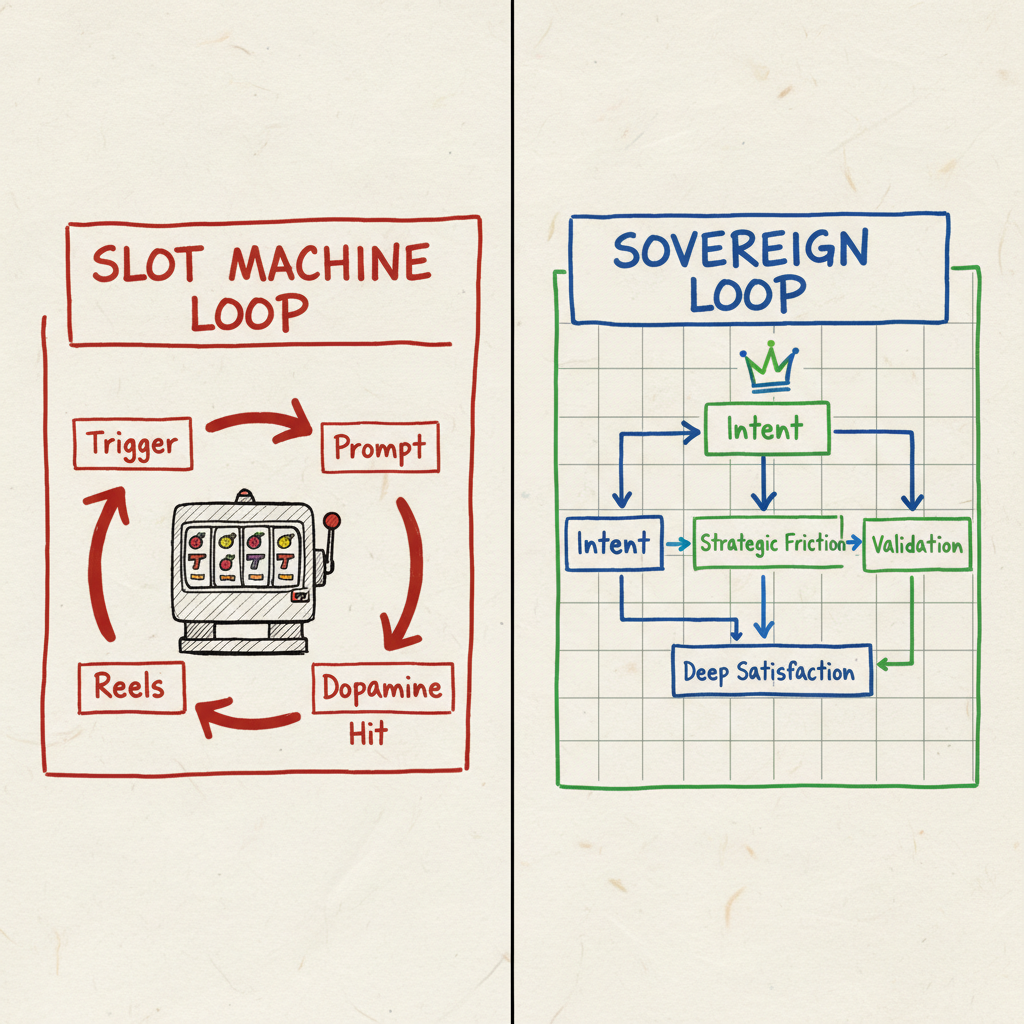
We need to reintroduce friction. Not “bad” friction, but Strategic Friction.
Adaptive Friction: We shouldn’t slow down everything. That leads to Decision Fatigue.
- Low Stakes (Regex): Fast generation.
- High Stakes (Auth Logic): Manual trigger required (
Ctrl+Space). - The Intent Gap: That split-second of effort forces you to form an Intent. You have to know what you want before you ask for it.
3. Gamify Quality (The Hallucination Bounty)
If the AI gamifies generation (making it fun to create code), we must gamify verification.
Leaders: Flip the script.
- Don’t just celebrate “Features Shipped.”
- Celebrate “Bugs Caught.”
- Create a “Hallucination Bounty.” Give a badge or a coffee gift card to the developer who finds the weirdest, subtlest AI error of the week.
Make the dopamine hit come from outsmarting the machine.
Warning: Be careful not to crowd out intrinsic motivation (pride) with cheap rewards (Overjustification Effect). The goal is to celebrate craftsmanship, not just bug-hunting.
4. The “No-AI” Gym
Finally, we need to treat manual coding like physical fitness.
You don’t lift weights because you need to move heavy metal objects around a room. You do it to build muscle.
We need “Deep Work Blocks”—maybe just 2 hours a week—where AI is banned.
- Write the boilerplate manually.
- Debug the race condition with print statements.
- Why? To keep the neural pathways alive. To maintain “Cognitive Fitness.” When the AI fails (and it will), you need the muscle memory to take over the controls.
☕ Conclusion: The Sovereign Developer
This series wasn’t written to scare you. It was written to empower you.
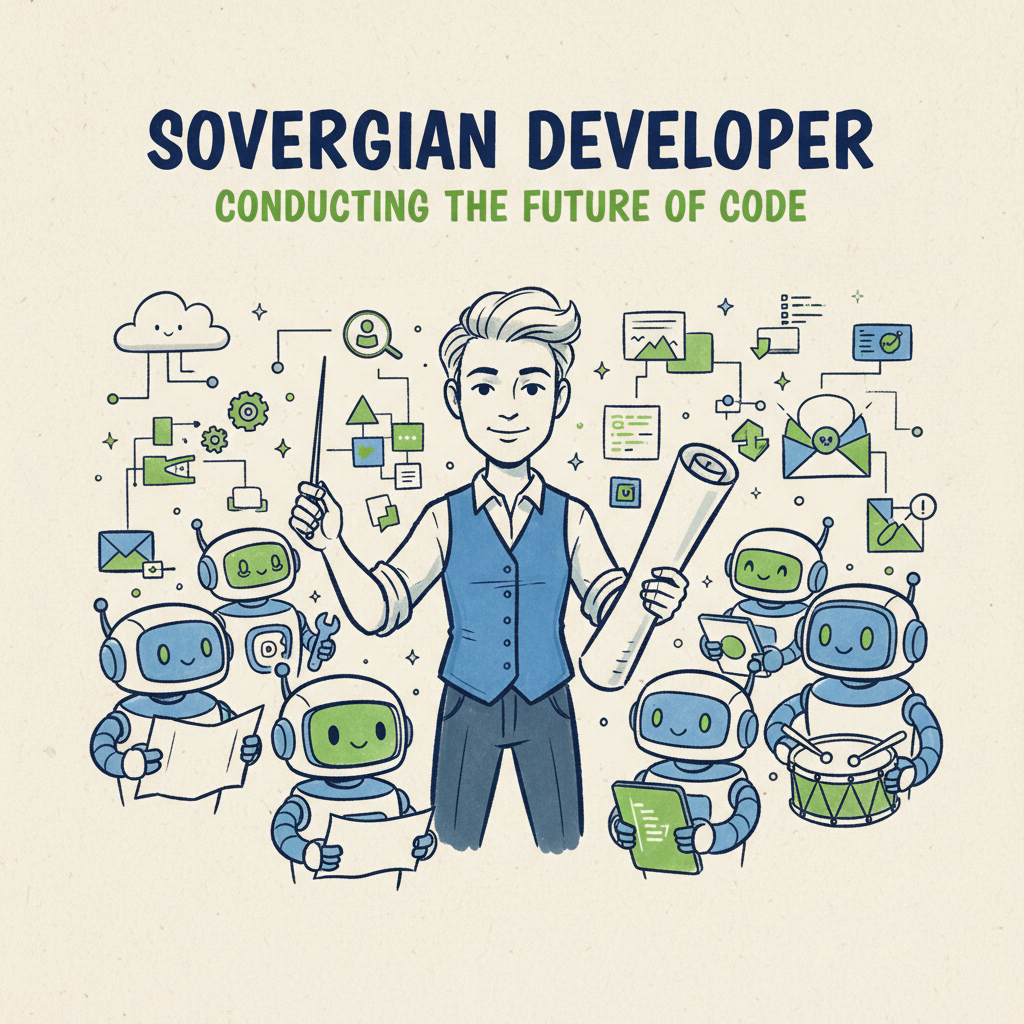
The future of software engineering isn’t about being a “Prompt or Context Engineer.” It’s about making the shift from Coder to Conductor. As outlined in my thesis, the goal is to become a developer who uses AI as a lever for their intellect, not a replacement for it. A conductor who leads the orchestra, rather than just sitting in the audience watching the show.
So, go ahead. Open your IDE/CLI. Use the AI. But keep your hand on the wheel.
And remember: Sometimes, the best way to solve a problem is to close the laptop, pick up a pen, and brew a really, really slow cup of coffee. ☕
🔬 The Hypothesis & The Request
This post proposes the following hypothesis:
Hypothesis: We can mitigate the risks of AI addiction by intentionally reintroducing Strategic Friction. By forcing “System 2” thinking (planning) before “System 1” thinking (generating), we can reclaim cognitive sovereignty.
Research Question I’d Love to See Answered:
UX Studies. Does removing the “streaming token” animation (the slot machine spin) reduce the dopaminergic response? Does adding a 10-second “thinking pause” improve the quality of the developer’s subsequent review?
📚 Further Reading
- Slow AI: The rise of Slow AI: Why devs should stop speedrunning stupid (CodeRabbit). The manifesto for adding friction back into the process.
- Calm Technology: How Design is Governance (UX Collective). Principles for designing non-intrusive tools.