
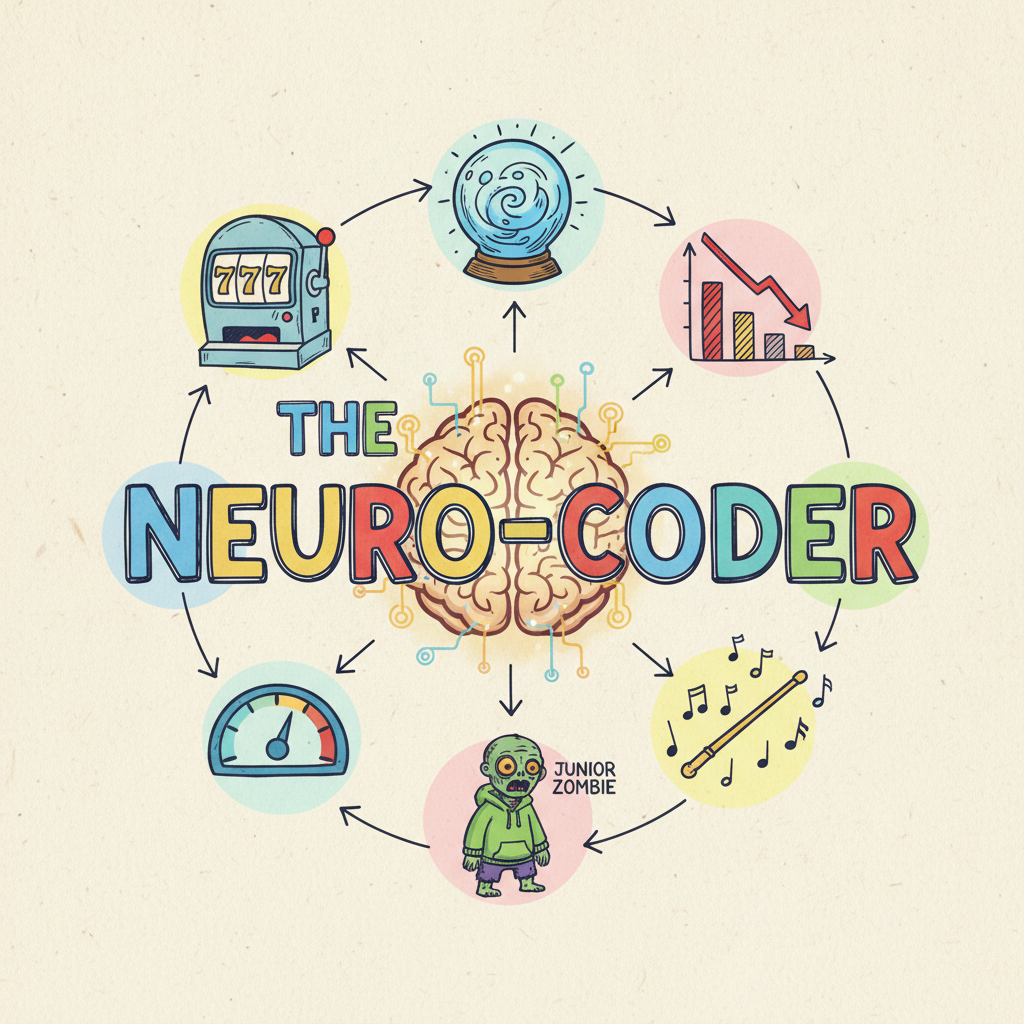
🧠💻 The Neuro-Coder: A 6-Part Investigation into AI, Dopamine, and Developer Sovereignty
We need to talk about what AI is doing to our brains.
For the last year, we’ve been obsessed with Benchmarks. Is Claude 3.7 better than GPT-5 (we all know its Gemini 😜)? Can it solve LeetCode Hard? Can it write a compiler in Assembly?
But we forgot to benchmark the most important component of the stack: The Human.
I’ve spent the last few months investigating the behavioral psychology and neuroscience of AI-assisted engineering. What I found was startling. We haven’t just upgraded our tools; we’ve fundamentally rewired our reward circuits. We’ve replaced the deep, slow satisfaction of building with the rapid, shallow dopamine hits of generating.
We’ve turned our IDEs into Slot Machines.
This series, The Neuro-Coder, is an investigation into this shift. It’s not a Luddite manifesto—I use AI every day. It’s a survival guide for the Sovereign Developer. We’ll move from the neurochemical ‘hooks’ that make these tools so sticky, through the data that reveals their hidden costs, and finally to a new framework for leadership and individual mastery.
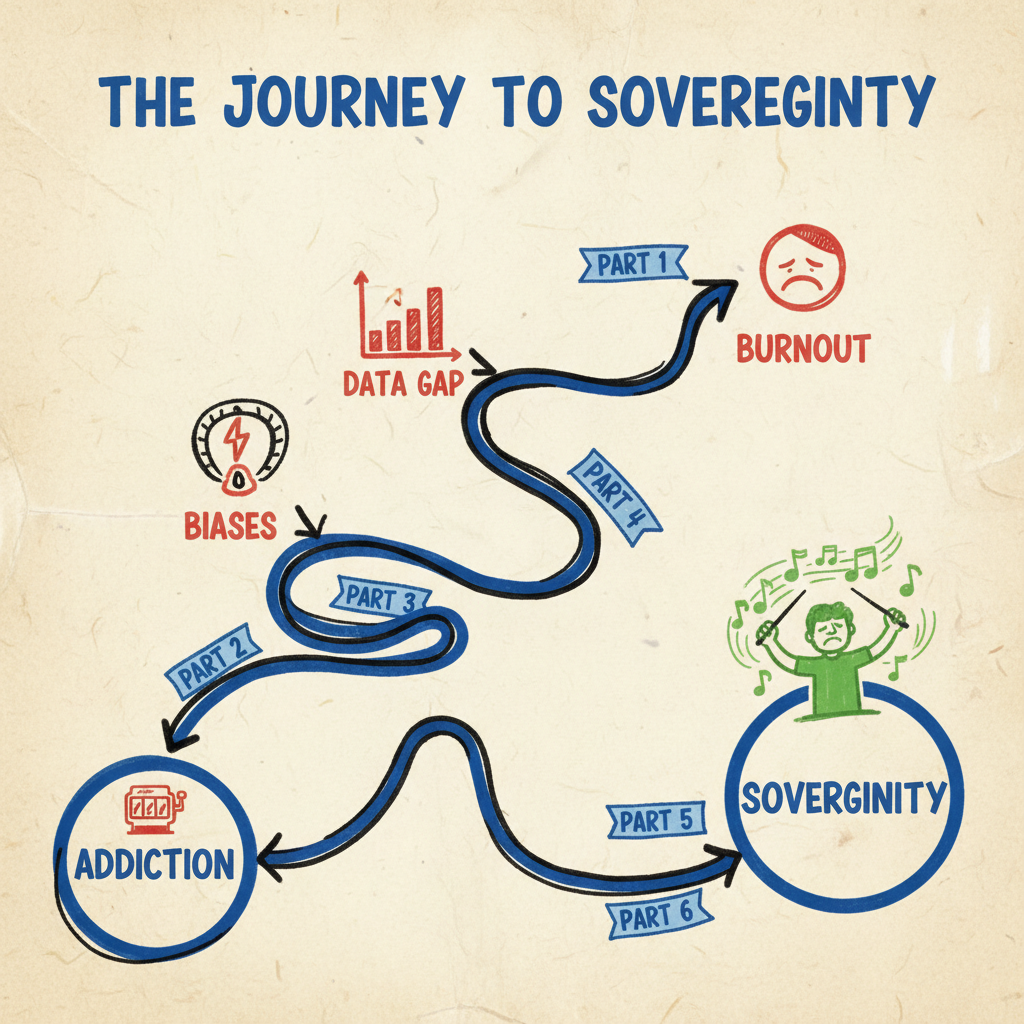
Here is the roadmap.
🎰 Part 1: The Diagnosis (Neurobiology)
The Slot Machine in Your IDE Why does “Vibe Coding” feel so addictive? We explore the neuroscience of Variable Ratio Reinforcement and why the uncertainty of AI output triggers the same dopamine pathways as gambling.
🔮 Part 2: The Trap (Psychology)
The Cognitive Architecture of “Vibe Coding” Why do we keep prompting when we know we should just type? We unpack the cognitive biases—the Sunk Cost Fallacy and the Reverse IKEA Effect—that keep us trapped in the “Regeneration Loop.”
📉 Part 3: The Cost (Data)
The Dopamine Gap (The Reality Check) We feel faster, but are we? We dive into the shocking data from the METR Study that reveals a massive gap between our perceived speed (+20%) and our actual performance (-19%).
🧟♂️ Part 4: The People (Human Impact)
The Human Cost (ADHD, Juniors, and Burnout) AI is a “Super-Stimulus” for neurodiverse brains. We look at the risks for ADHD developers, the crisis of the “Zombie Junior” (Senior Output, Junior Understanding), and the burnout of Senior Engineers.
📊 Part 5: The Business (Metrics)
Beyond DORA (Why Velocity is Meaningless) If lines of code are free, “Velocity” is dead. We propose a new framework of Resilience Metrics—like Rework Rate and Cognitive Load—to measure true engineering health.
🐢 Part 6: The Cure (Solutions)
Designing the Casino (How to Tame the Machine) We can’t ban AI, but we can redesign our relationship with it. We explore the philosophy of “Slow AI,” Strategic Friction, and how to gamify quality to reclaim your cognitive sovereignty.
☕ The Sovereign Developer
The goal of this series is simple: To move you from being a “Consumer” of code to a “Director” of intelligence.
To use the tool, without being used by it.
So grab a coffee (maybe a slow pour-over, just to remind yourself what patience feels like), and let’s dive in.